

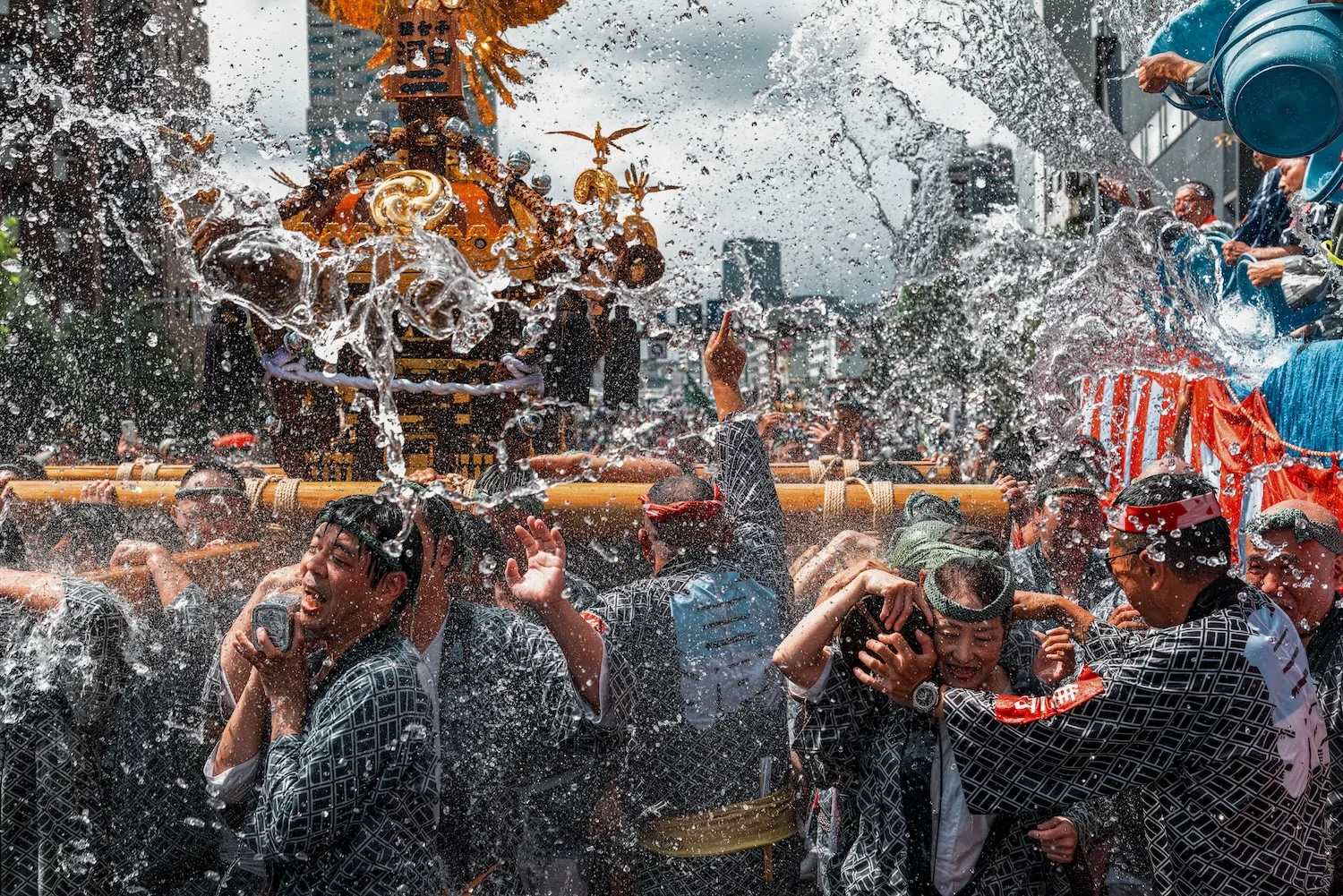
Yuzo Fujii turns everyday Tokyo into a quiet, cinematic stage—where light, shadow, glass, and rain reflections do the storytelling. His images invite you to slow down and notice the beauty most people pass without seeing: a fleeting gesture, a perfectly timed silhouette, a mood suspended between nostalgia and modern city life. Regularly featured within the 1X community, Yuzo crafts photographs that feel both precise and deeply personal—built on patience, pre-focus, and a sharp sense of composition.
In this interview, he shares how weather and light shape his routes, why he relies on a Leica M for street work, what Venice taught him about texture and narrow alleyways—and how revisiting his archives helps him uncover forgotten images that often become the missing pieces of a stronger series.
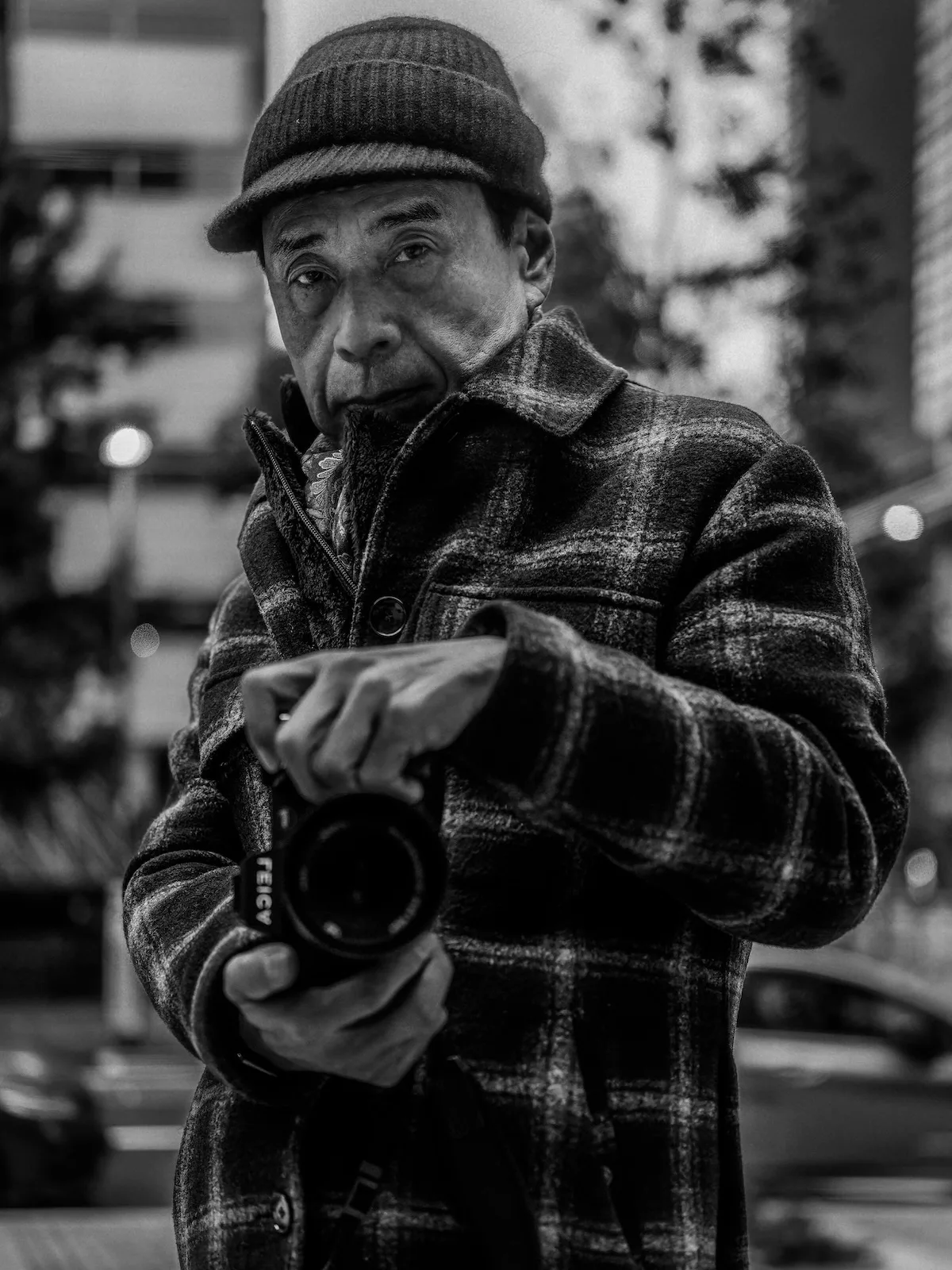
From First Steps to Personal Vision
How did you become a photographer?
Even before I started photography, I was drawn to art, design, and music. But as the eldest son, I was expected to take over my father’s business, so I set aside the idea of pursuing art professionally. I went on to grow that business, yet I still wanted a meaningful way to stay connected to art through a true passion. I felt I was too old to master painting or a musical instrument from scratch, but photography was something I knew I could keep practicing—and enjoying—for many years.
When I was younger, I shot with film cameras, but I took a long break to focus on tennis. I returned to photography about ten years ago. At first, I tried to recreate famous landscape images, but that often means revisiting the same places again and again, waiting for perfect conditions. With so many photographers competing for the same small viewpoint, the atmosphere can also become uncomfortable. And even after all that effort, the results rarely feel different from what already exists. I realized I wasn’t creating anything truly my own.
That’s when I shifted to street photography. There are no crowds of photographers, and you can make unique images simply by chasing light, shadow, and composition. There’s no waiting in line—you can shoot even if you only have 30 minutes. Beyond basic etiquette, there are no rules. You’re free to develop your style in your own way.
My favorite photographers are Saul Leiter, Fan Ho, and Rinko Kawauchi.
What are you trying to capture or express through your photography?
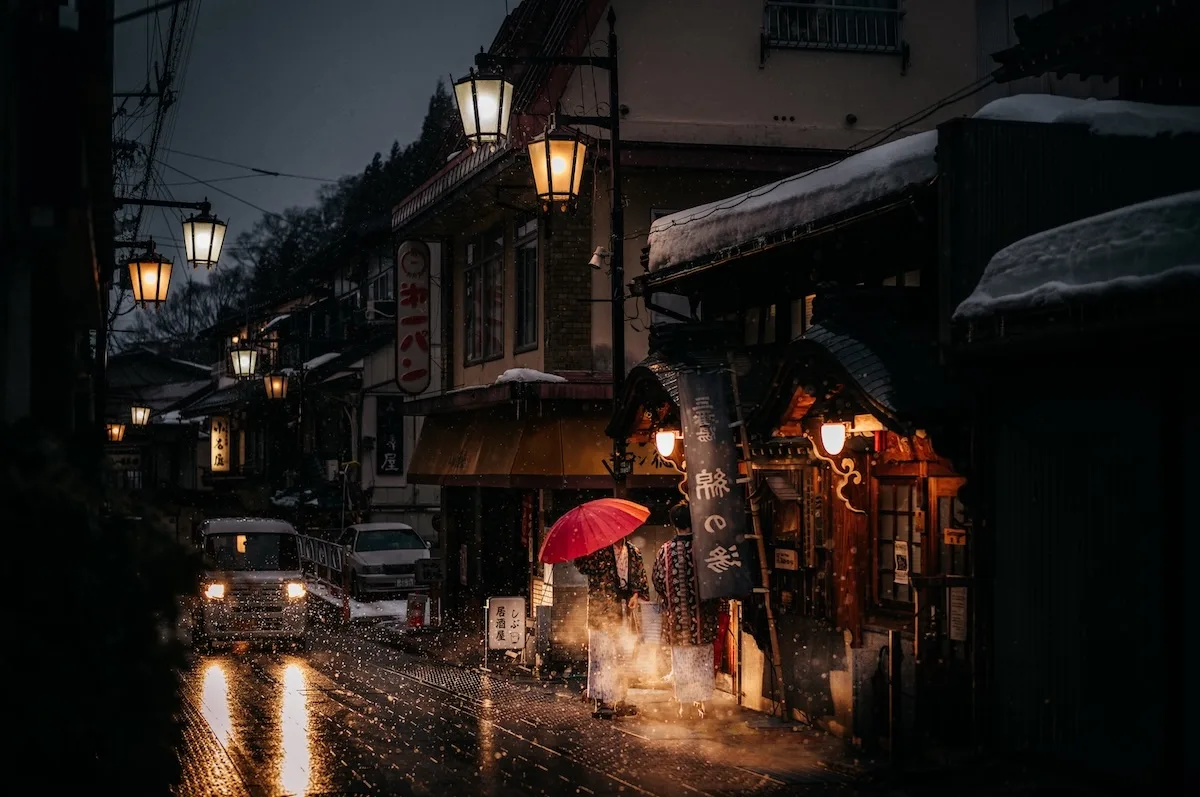
I focus on capturing scenes from everyday city life—those fleeting moments most people walk past without noticing the beauty in them. I want viewers to think, “There’s so much beauty around us,” and to feel the composition and emotion that might otherwise slip by unseen.
I also hope my images stir bittersweet memories and personal stories we all carry. I’m drawn to nostalgic, cinematic atmospheres, and it’s deeply rewarding when a photograph of mine awakens someone’s own cherished memories—or even their quiet aspirations.
Tokyo in Practice — Routine, Conditions & Gear
What does your typical shooting routine look like?
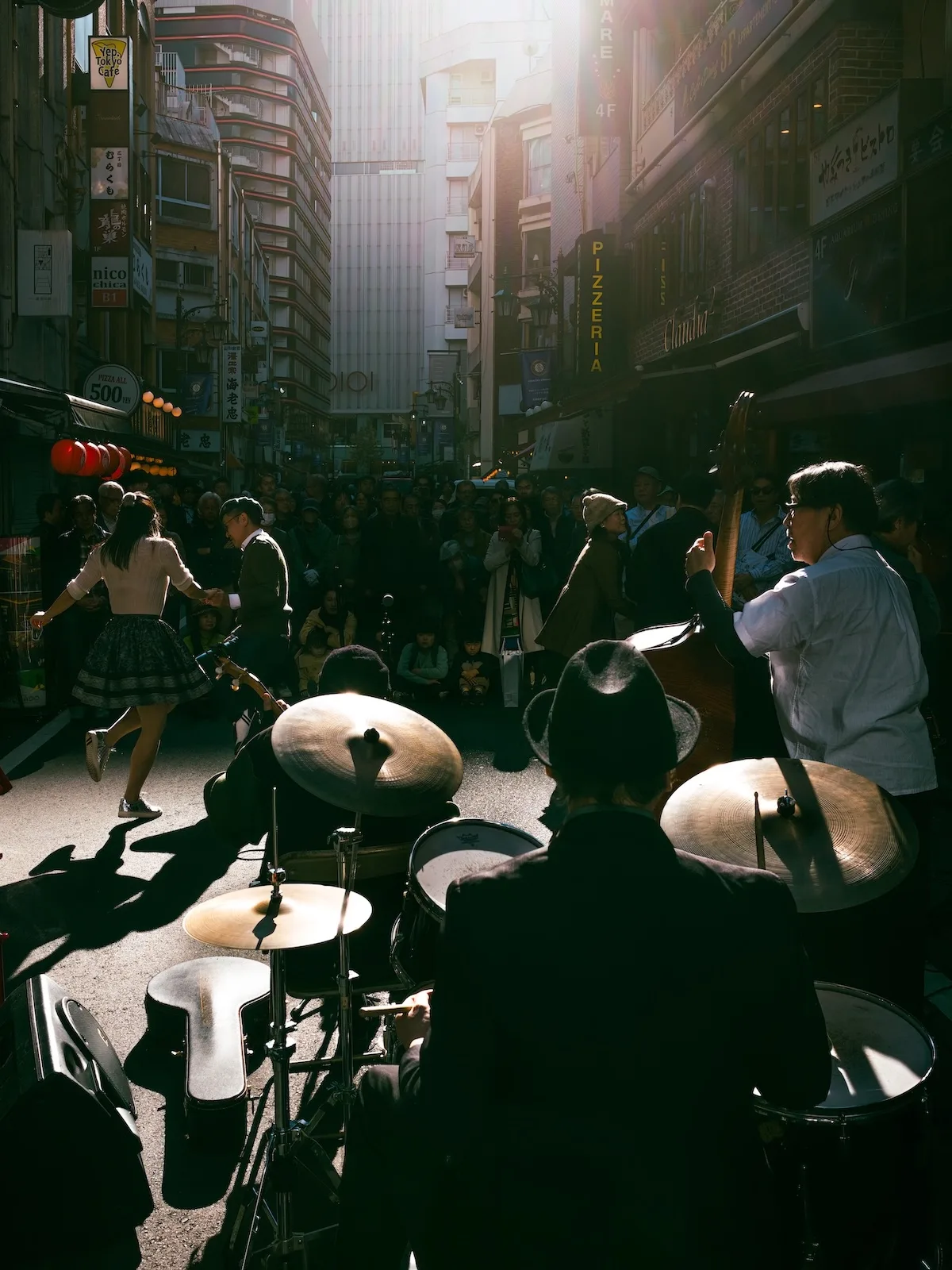
Where I go depends entirely on the conditions—whether it’s morning or evening light, crisp winter air in Tokyo, spring blossoms, autumn leaves, the sun’s position, and so on.
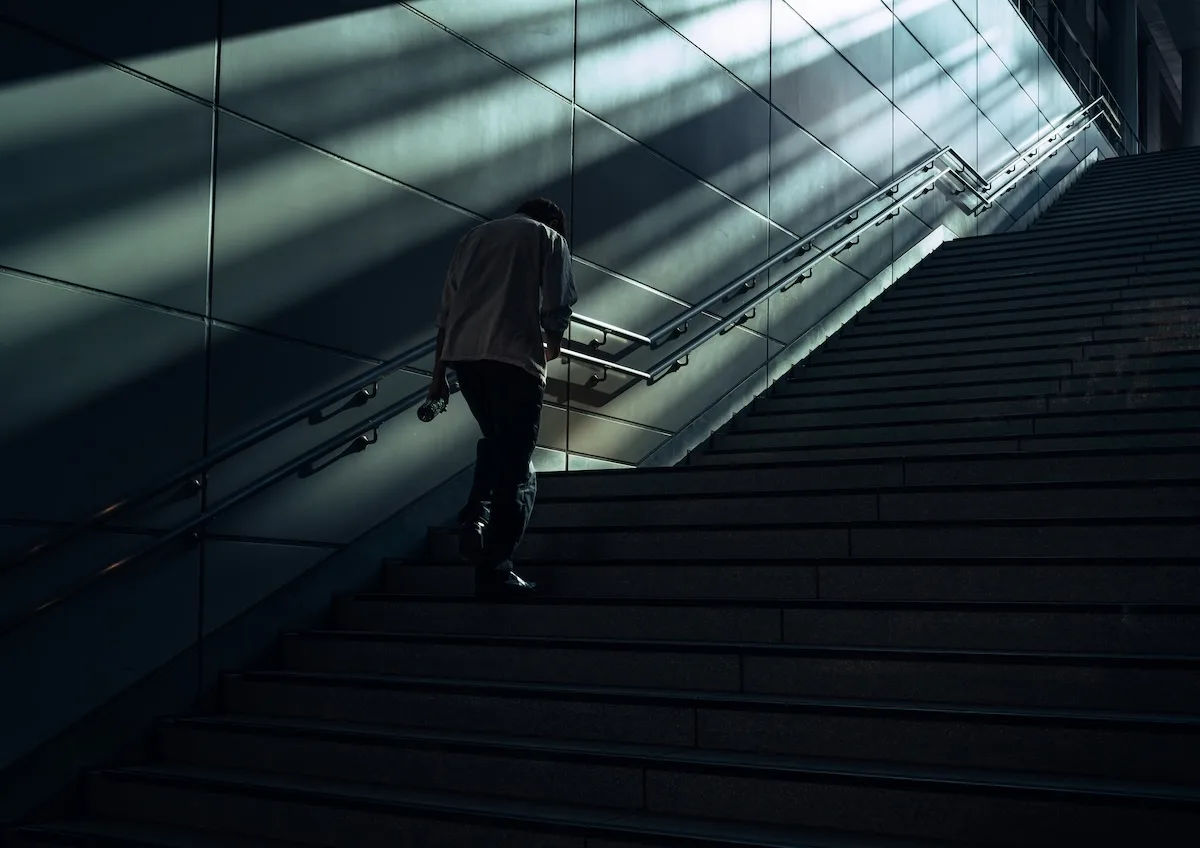
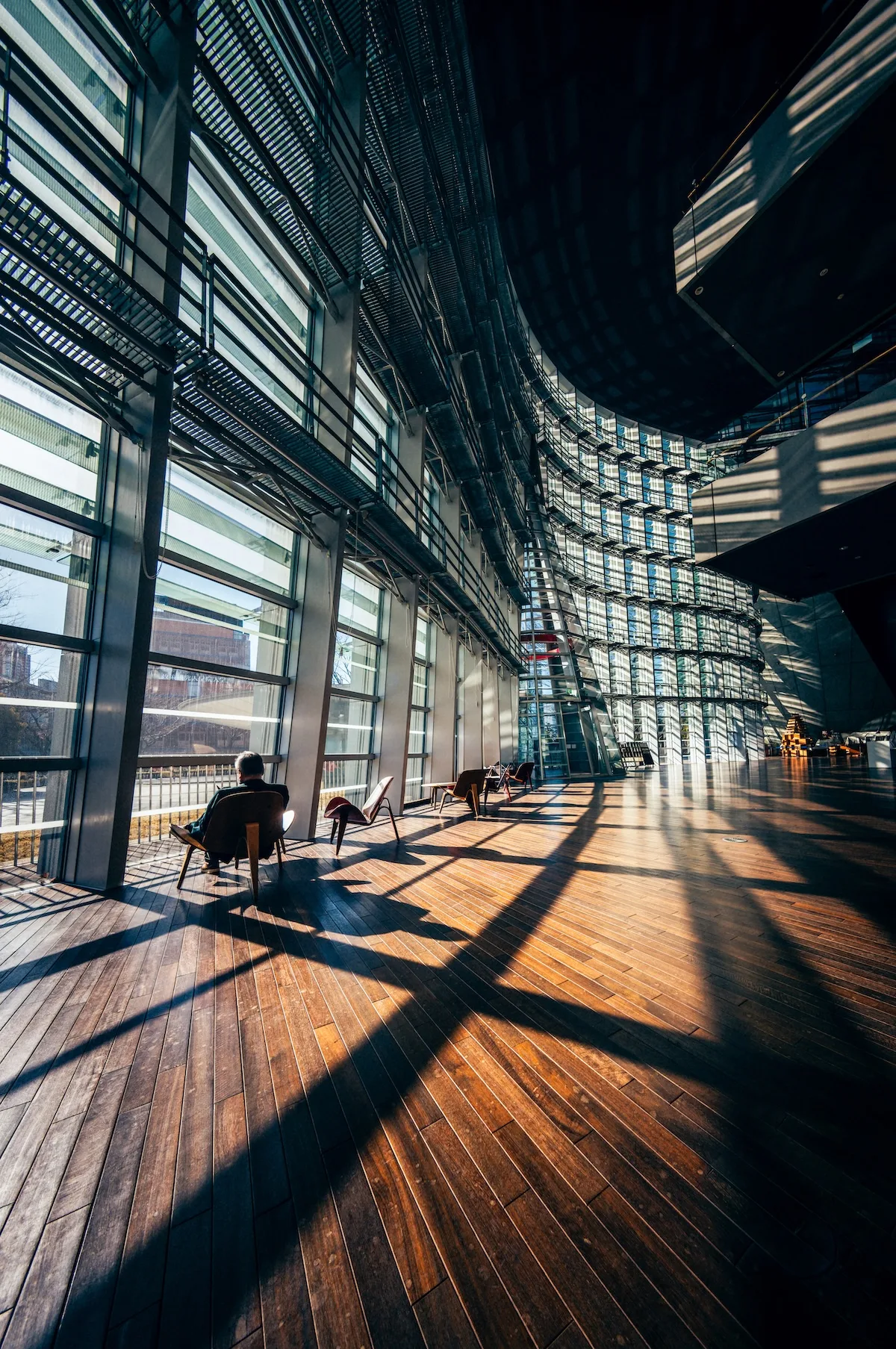
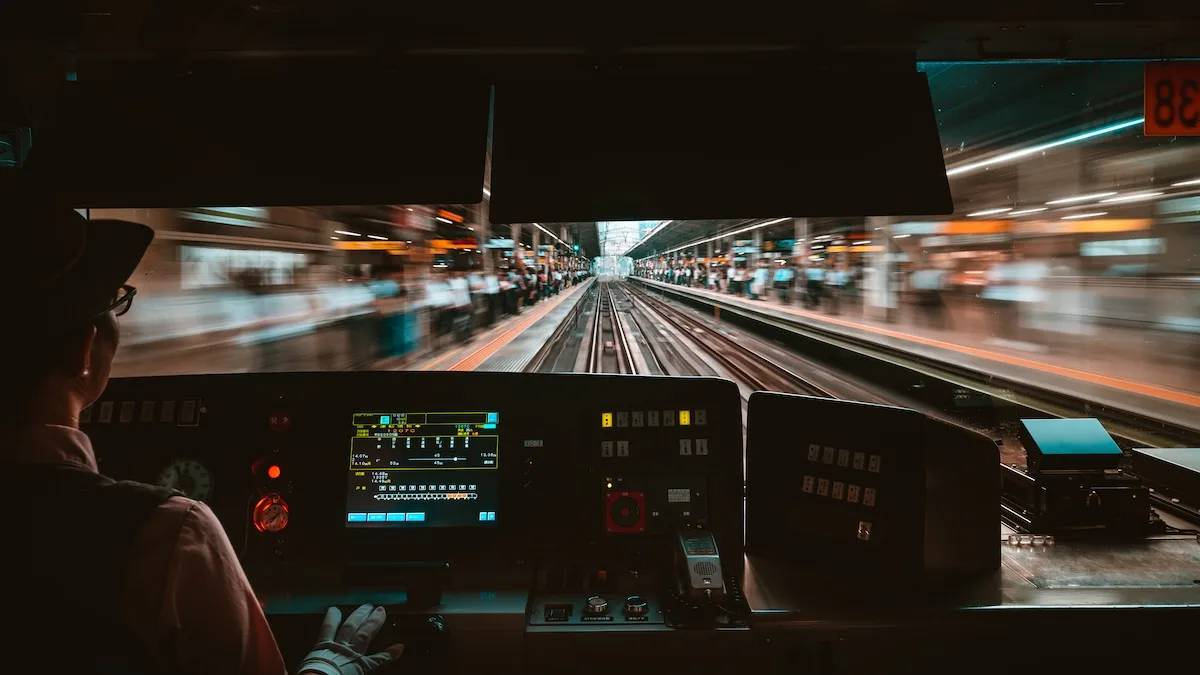
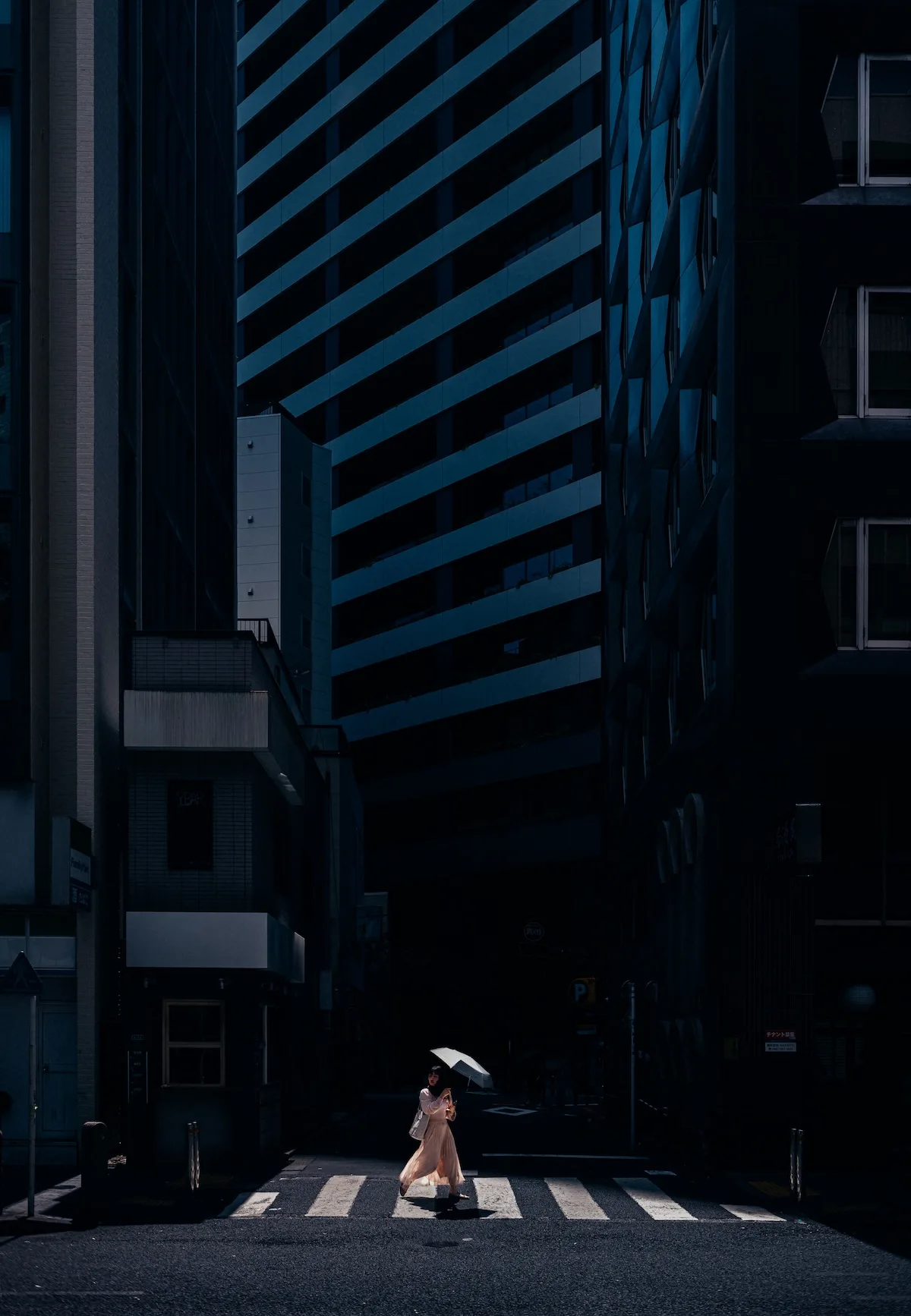
On sunny days, I seek out places with beautiful light and shadow—museums, for instance, or districts filled with skyscrapers.
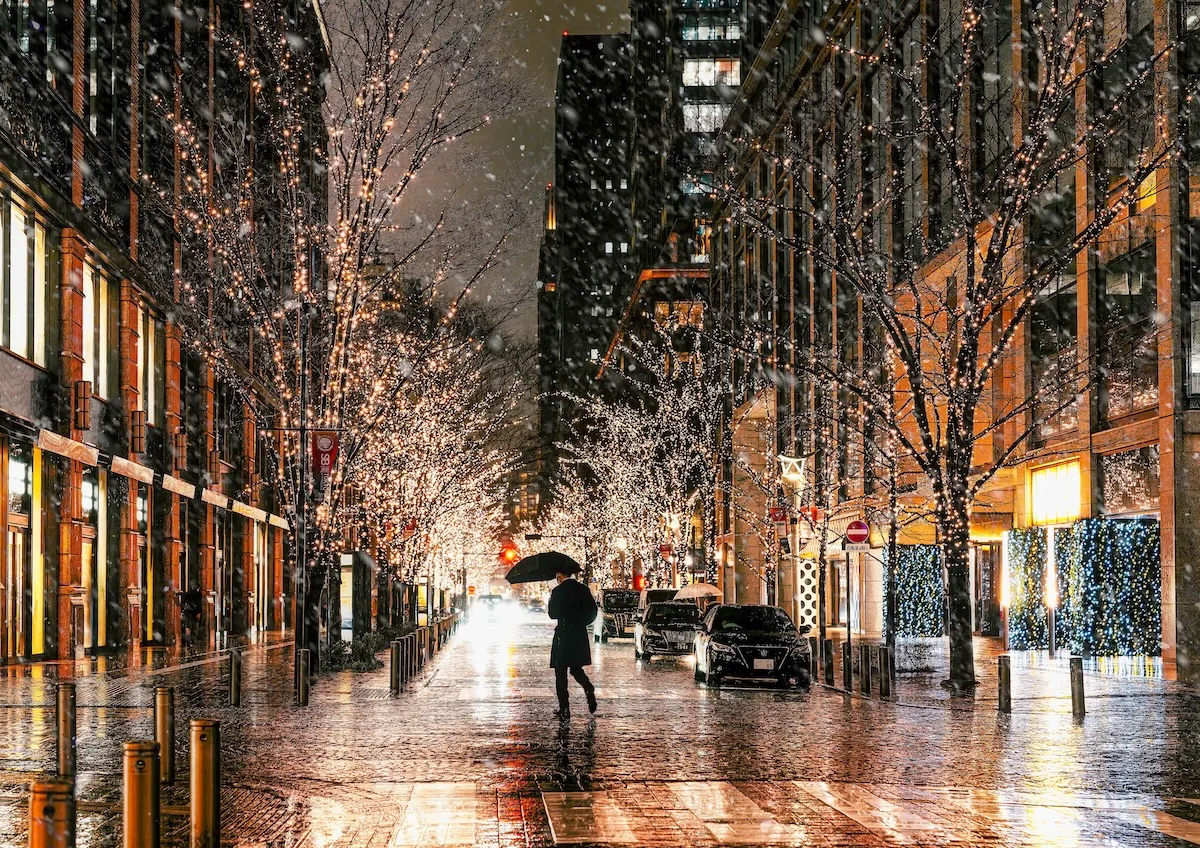
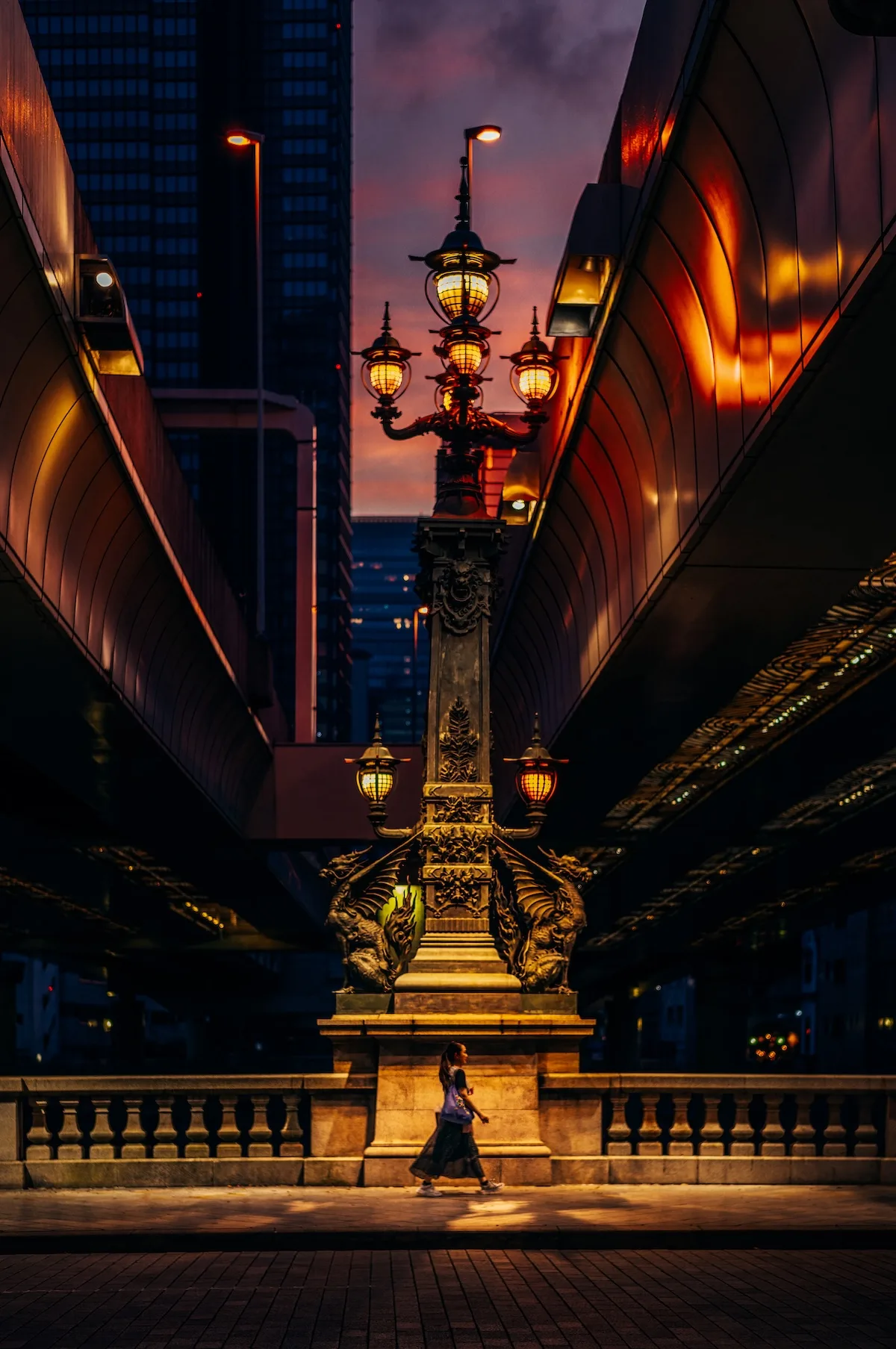
On rainy nights (which I especially love), I head to areas where the streets turn into a canvas of colorful reflections.
Cloudy days, honestly… I’m not a fan.
When you go out shooting in Tokyo, how do you choose your gear?
For daytime street photography in central Tokyo, I usually pick three or four lenses from the 18mm, 21mm, 28mm, 35mm, and 50mm range. In the evening, I mostly stick to just the 35mm and 50mm.
For events like festivals, I’ll sometimes bring a standard zoom—or a telephoto zoom—depending on the situation.

You shoot with a Leica — what do you love about it, and how does it shape your street photography?
I still believe the Leica M series is one of the best-suited cameras for urban street photography. It’s compact, quiet, and unobtrusive. M lenses deliver beautiful micro-contrast, a strong sense of depth, and colors that feel both vivid and refined. I even get excited just reviewing images on the rear screen.
In busy city scenes, being able to isolate your subject is essential. I often shoot through glass, and in many situations the rangefinder can be faster than autofocus. There’s nothing quite like pre-focusing, waiting patiently, and capturing a decisive moment the instant the right person steps into the frame.
You recently traveled to Italy. From a street photography perspective, what differences struck you most between Venice and Tokyo?
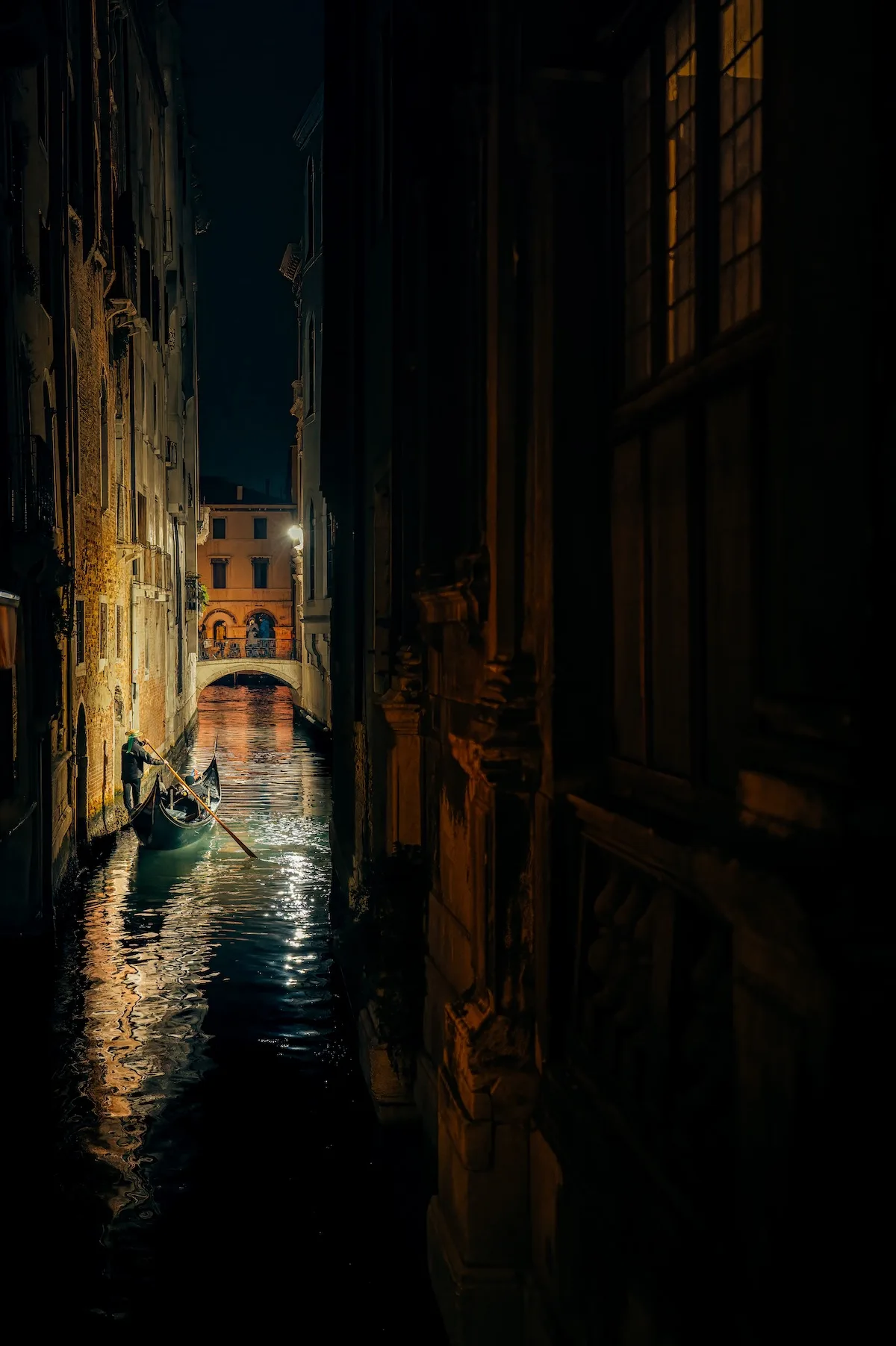
I’m especially drawn to texture—water, timeworn stone, wood, metal—and to narrow alleyways. Venice has all of that. You can weave canals into everyday street scenes, and because the pathways are so tight, there are no cars. It’s an environment that perfectly matches what I love to photograph.
Tokyo has its share of narrow alleys too, but nowhere near as many as Venice. In return, Tokyo offers a much wider range of settings and atmospheres.
Building a Cohesive Series From Individual Frames
You’ve been selected for seven years in the Tokyo Camera Club 3×3 category — a series of nine square-format images sharing the same theme or mood. Do you start with a concept, or discover it afterward by connecting your images?
The 3×3 competition is incredibly demanding every year.
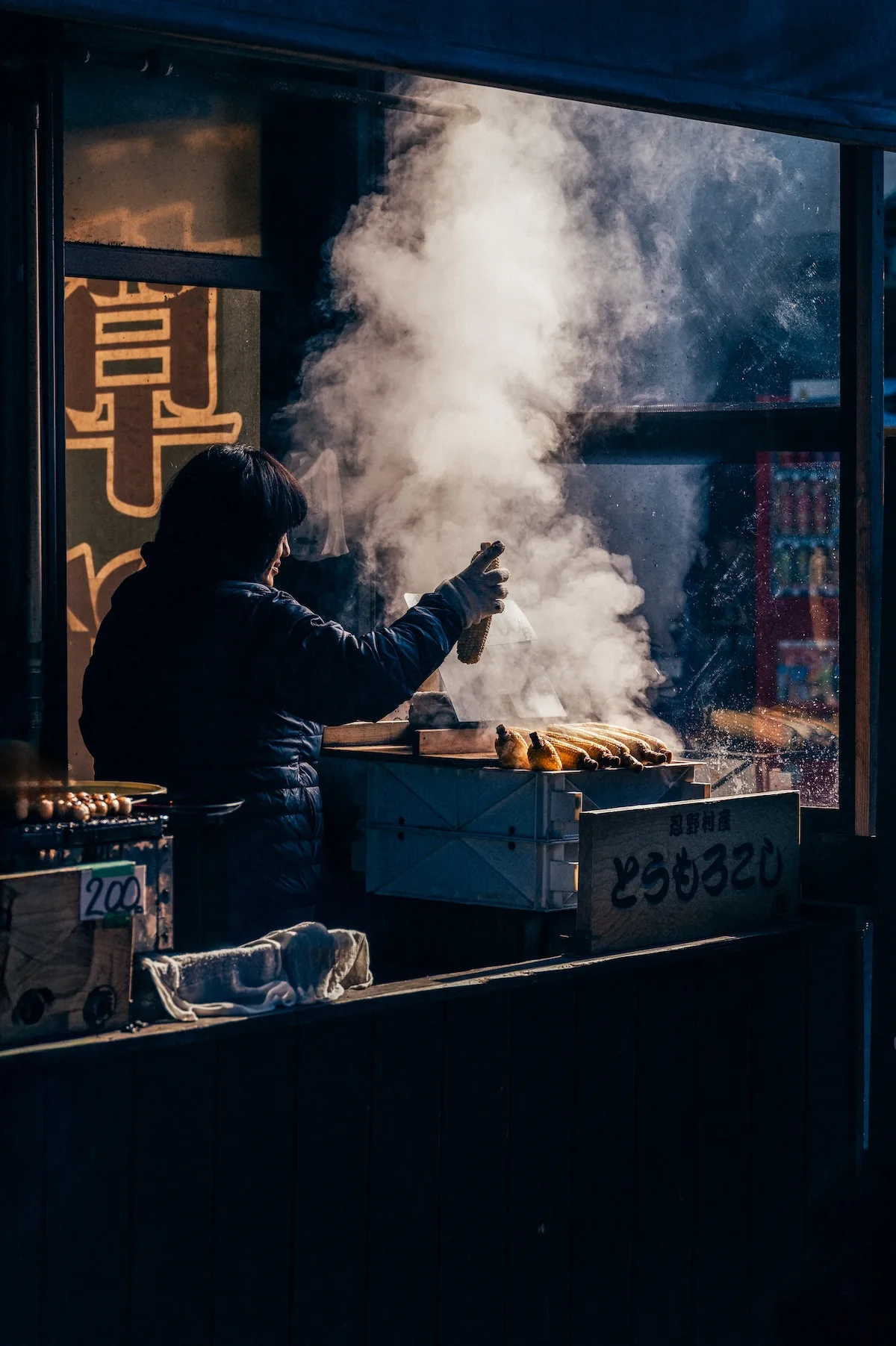
I used to shoot with the 1:1 format in mind, but the results never felt satisfying. Over time, I’ve learned that the strongest series comes from simply collecting the images I truly want to make—photographs that come from the heart—and then shaping the 3×3 through selection afterward.
Could you describe your post-processing workflow—from selecting images to final edits?
I shoot in RAW and do my main editing in Lightroom Classic.
For images I plan to showcase, I run them through DxO PureRAW first, then fine-tune them in Photoshop using Topaz Denoise AI and Topaz Sharpen AI. For portrait work, I also use Retouch4me.
You are a Peakto user. Which features do you find most valuable, and how do you use Peakto in your daily workflow as a photographer?
The “Find Similar Media” feature is incredibly useful—and genuinely fun to use. It often helps me rediscover older images I’d completely forgotten about.
What photography communities, clubs, or events are you involved in, and how do they influence or support your work?
I’m involved in a few photography communities and groups that continue to shape the way I see and work:
- 1x (Professional Member)
- JLUG (Japan Leica Users Group)
- Tokyo Camera Club
Seeing the work of other talented photographers is deeply inspiring—and constantly educational.
What advice would you give to a young photographer who is just starting out—especially someone interested in street photography?
To see more of Yuzo Fujii’s Tokyo street photography, you can follow him on his Instagram.
Photo credit: © Yuzo Fujii